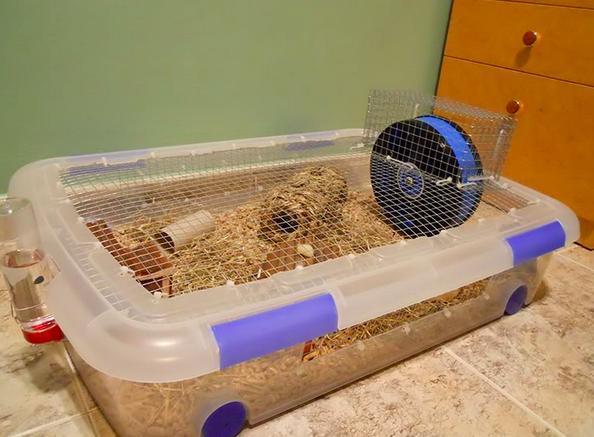
Mouse Cage Ideas: How to Set Up a Mouse Cage


Before bringing home a pet mouse, ensure you have an engaging and well-organized cage ready to provide a comfortable and stimulating environment for your new pet. Here, we'll guide you through everything you need to know about setting up a mouse cage and arranging it so that your mouse enjoys a happy and enriched life.
Mouse cage
If you haven't yet acquired a mouse cage, your first task is to find a suitable habitat for the animal. Fortunately, there's a method to calculate the necessary space based on the number of mice you plan to keep.
The living area should be spacious enough for the mice to stand upright. A mouse stands about 20-25 centimeters on its hind legs. Ideally, you should aim for a cage that is around 50cm tall. This allows you to incorporate two levels, optimizing the available space for your pets.
On this site (Opens new window), you can access a calculator. By inputting the width (Width), depth (Depth), and height (Height) of your cage, this tool will determine how many mice it can accommodate.
Remember to use centimeters (cm) for measurements. Once you've filled in all the details, calculate the number of mice (Calculate Number of Rats) the cage can comfortably house.
The space should also permit the mice to stand on their hind legs. With a cage height of around 20-25 cm, you should ideally partition the interior into two floors, making the most of the available room.
How many mice should I have?
Only male mice can live alone. It's advisable to keep at least 3 female mice together so that if one were to pass away, the others would still have companionship. This social structure is crucial for their well-being and happiness, as mice are naturally social creatures.
Glass tanks do not make good mouse cages
Fish tanks and aquariums are not ideal as mouse cages due to inadequate ventilation and the difficulty mice face when attempting to climb and play. These enclosures can also lead to health issues, primarily due to the potential buildup of ammonia from urine.

The mouse's hiding place
Most rodents require a secure, dark, and enclosed space for retreat. Ensure you include a halved coconut shell or a similar hiding spot for your mouse. This area often becomes a favorite resting spot for all rodents and may also serve as their sleeping area.
Hygienic Bedding
The bedding must be safe and free from harmful materials. Avoid using the following:
- Newspaper
- Toilet paper
- Cedar
- Pine
- Poplar
- Cat litter
Opt for commercial bedding available at pet stores. You can visit stores such as Pets at Home to ask for the ideal bedding for mice.
Never use pine or cedar sawdust as bedding, as they can cause severe respiratory issues for your rodent.

A sleeping area for your mouse
It's essential to provide safe materials for your mouse's sleeping area. Avoid fluffy cotton, which can entangle their limbs and potentially cause injury.
Cotton pods are highly recommended for mice. This natural cotton allows them to engage in the activity of shredding it to create their bedding, which provides both comfort and mental stimulation.
A Mouse Wheel
Mice require exercise, and a mouse-wheel is essential. It should be large enough for safe use, preventing injury, and without gaps where the mouse's tail could become trapped.
Additionally, consider providing a mouse-ball for your pet to safely explore your home while you clean its cage, offering further exercise and enrichment.
Mouse toys
Include a piece of wood in the cage for the mouse to chew on. Without something to gnaw, their teeth could overgrow, necessitating a visit to the vet for trimming. Do not attempt this yourself—always consult a professional.
Some excellent toy options are:
- Toilet roll tubes
- Hammocks
- Rope toys
Avoid using treated wood. A natural cotton sheath is an excellent toy, as rodents can chew it and use it for bedding material.
If you want to read similar articles to Mouse Cage Ideas: How to Set Up a Mouse Cage, we recommend you visit our Pets category.
Tips
- Hay is beneficial for mice to chew on as it aids in digestion and provides necessary fiber.
- Ensure you purchase specialized mouse food from a pet store. It's challenging for mice to drink from a water bowl, so invest in a bottle designed for mice, which can be securely attached to the side of the cage.