How to Dry Bath a Rabbit

Rabbits are very clean animals. They always find a moment to groom themselves as they love to feel clean. Normally you do not need to bathe them, but it is true that in certain cases you will have no choice but to do so even though the rabbit does not like it. For example, if you have a Persian rabbit and its coat gets dirty it will need cleaning in addition to brushing. But what happens if your rabbit does not like the bathing? You will have no choice but to dry wash your rabbit. Do not worry if you do not know what this is, next in oneHOWTO we explain how to dry bath your rabbit.
Steps to follow:
Baby rabbits should not be wet, so a dry bath is the best option to bathe them. Also, if your rabbit is an adult and does not like bathing in water you can also dry bathing it. This method is not only less stressful but also safer for these delicate creatures, as prolonged exposure to water can lead to health issues such as hypothermia or skin irritation.
Dry shampoos for rabbits usually come in powder. Make sure that it is suitable for your rabbit's delicate skin. If you are not convinced, ask which dry shampoo is best to dry bath your rabbit. Another remedy if you haven't got dry shampoo is to use baby cornstarch, widely available in most supermarkets (though you should not mistake it for talcum powder or regular baby powder). Additionally, while choosing a product, ensure it is free from harmful chemicals or fragrances that could irritate the rabbit's sensitive skin.
Take great care with the nose, ears, eyes, and mouth of your rabbit when you apply the powder. To do this, when you sprinkle the powder on it, carefully cover its head with your hand so the powder does not irritate it. It's crucial to prevent any powder from entering its respiratory system or eyes, as this could cause discomfort or health issues.
When you have the head well covered with your hand, sprinkle the powder all over its body. Make sure to distribute it evenly to cover all areas, especially those that are prone to getting dirtier, such as the underbelly and legs.
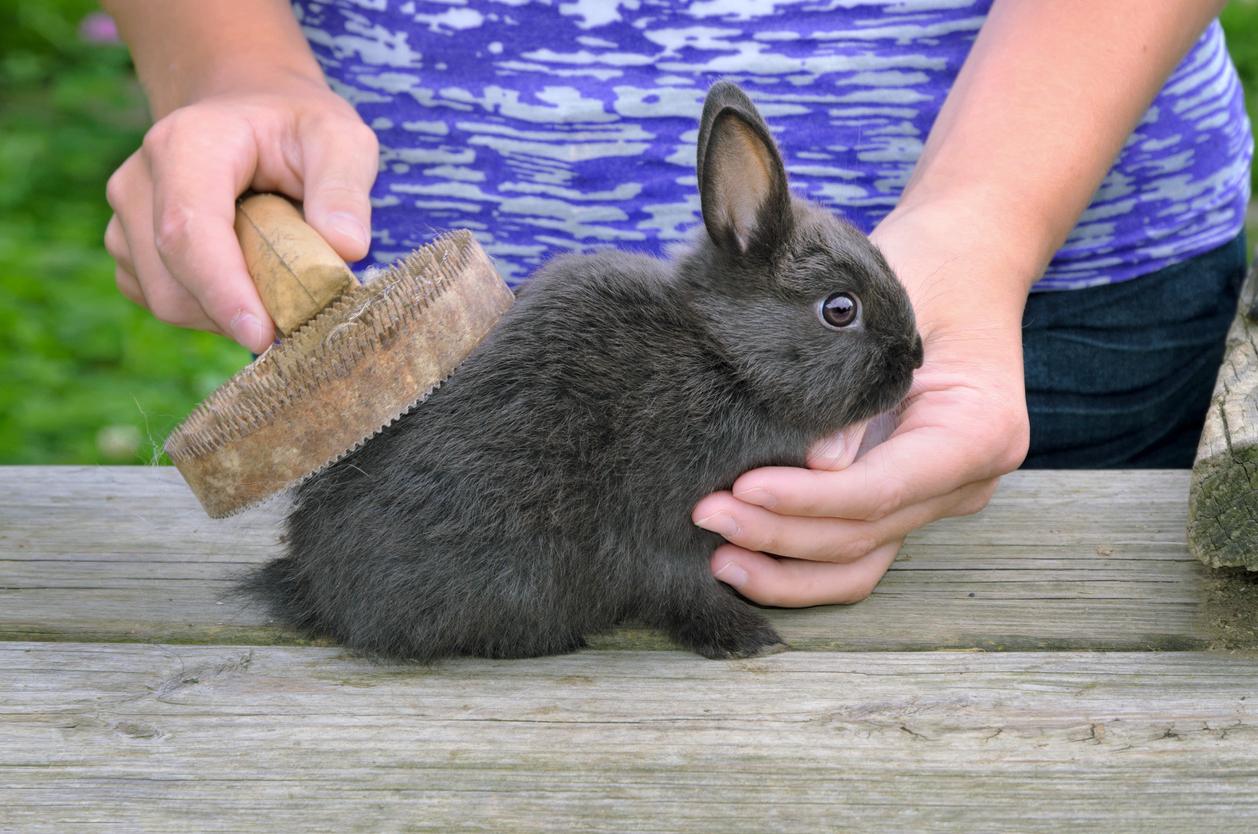
Once your rabbit's body is covered with the dust, take a brush suitable for its hair and brush it repeatedly both with the hair and back brushing it. Use a fine comb to get rid of any sticky remnants that may not have disappeared. Don't tug too hard and do it very softly and slowly. Remember that if it is the first time you do this, the rabbit will be nervous and will have to be accustomed slowly. It's also beneficial to talk to your rabbit in a soothing voice to help calm it down during the process.

When brushing, you will be removing dead hair, which is also an area or fur that will have accumulated dirt. Repeat the action until you see it is clean. Regular brushing not only helps keep your rabbit clean but also improves circulation and can serve as a bonding activity between you and your pet.
Like so, you can dry wash your rabbit without the need of making it stressed through contact with water. As it grows and becomes an adult, it will get used to it and it may even become a pleasurable activity. In addition to brushing, you will take away all the dead hair and thus prevent it from eating it. Take advantage and clean its cage so your rabbit doesn't get too dirty either. A clean environment is paramount for a rabbit's health, as it minimizes the risk of infections and promotes overall well-being.
If you want to read similar articles to How to Dry Bath a Rabbit, we recommend you visit our Pets category.